
Dentures in Punawale for Missing Teeth
Dentures are removable replacement teeth that restore chewing, speech and the shape of your face when several or all natural teeth are missing. Care 32 Dental Clinic provides complete and partial dentures in Punawale, planned by Dr. Ranjeeta Yadav (BDS) over a few visits so the fit, bite and appearance can be checked.
Missing teeth can make eating harder, affect speech and cause the cheeks and lips to appear sunken. A well-fitted denture can help restore everyday function and give your smile a fuller appearance. If your old denture has become loose, cracked or uncomfortable, it may be possible to adjust, reline or replace it.
Open Monday to Sunday · Morning and evening appointments
What Are Dentures?
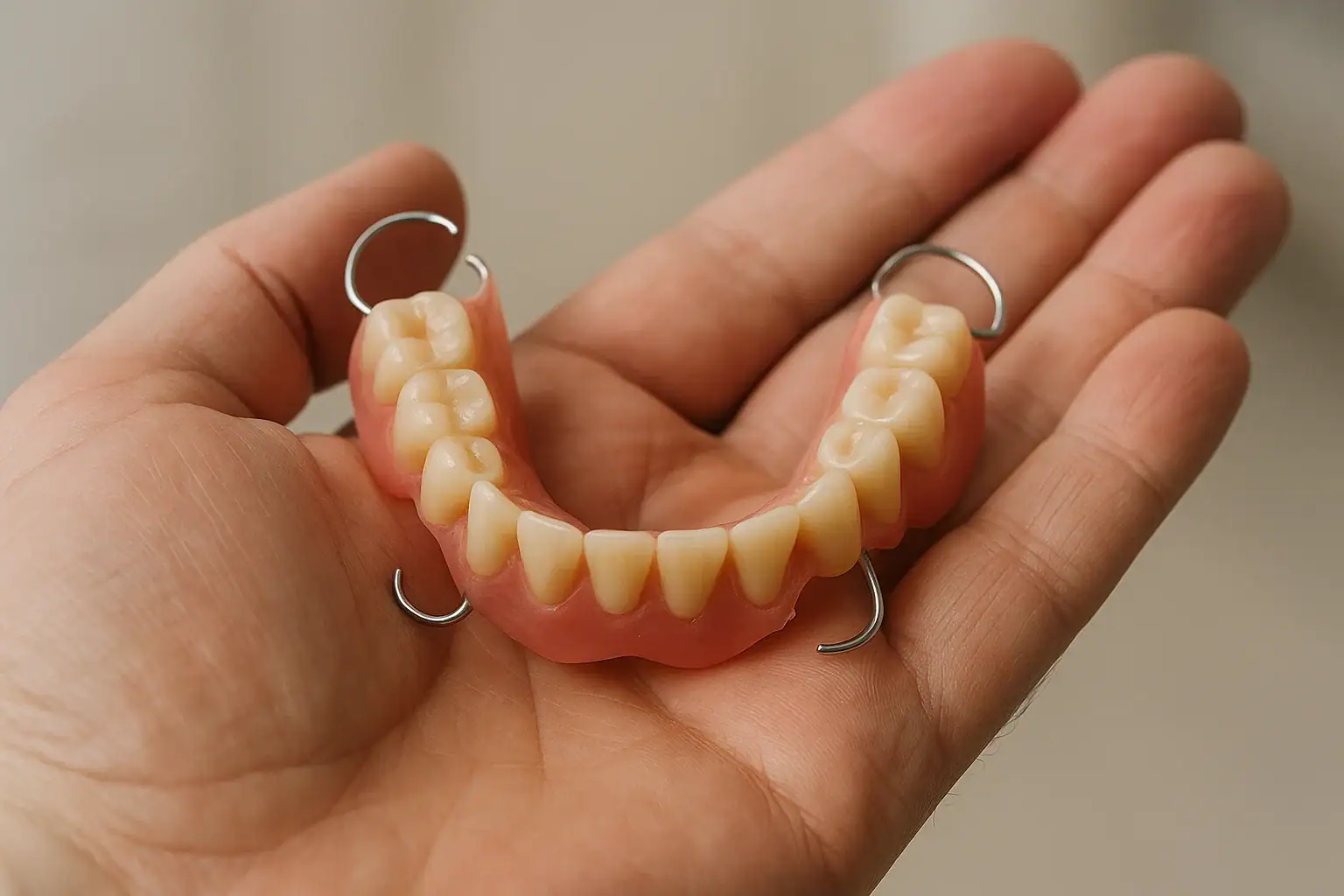
A denture is a removable dental appliance that carries artificial teeth and rests on the gums. A complete denture replaces all teeth in the upper or lower jaw. A partial denture fills gaps when some natural teeth remain, using clasps or a supporting framework where appropriate. Most removable dentures are taken out for cleaning and usually removed at night.
Who May Be Suitable for Dentures?
- People missing all teeth in the upper jaw, lower jaw or both
- People missing several teeth who prefer a removable option
- Patients for whom a bridge or dental implants may not be suitable
- Patients who prefer to avoid implant surgery
- People whose existing denture is loose, cracked, worn or uncomfortable
- Patients considering an immediate denture around the time of planned tooth extraction
Healthy gums and any remaining natural teeth are important for a comfortable fit. If decay or gum disease is present, your dentist may recommend treating it before making the denture.
Types of Dentures at Care 32 Dental Clinic
The right denture depends on how many teeth are missing, the condition of the remaining teeth and gums, comfort, appearance and budget. Your dentist can explain which options are suitable after an examination.
Complete (Full) Dentures
Complete dentures replace all teeth in one jaw. The upper denture covers the palate, while the lower denture is shaped to leave room for the tongue. Fit and stability depend on the shape of the gums and the supporting tissues.
Acrylic Partial Dentures
These use an acrylic base with replacement teeth and may have wire clasps that help hold the denture in place. They can be a practical option in selected cases, including some temporary or budget-conscious situations.
Cast Metal Partial Dentures
These use a thin metal framework with replacement teeth. When suitable, the framework can provide strength and support with less bulk than some acrylic designs.
Flexible Dentures
Flexible partial dentures use a more flexible base material and may have gum-coloured clasps. They can be suitable for selected cases, but are not the best choice for every gap or bite condition.
Immediate Dentures
An immediate denture is prepared before planned extractions and inserted around the time the teeth are removed. Because the gums and bone change shape during healing, adjustments, relining or a replacement denture may be needed later.
Implant-Supported Dentures
In suitable patients, dental implants can help retain a removable denture and improve stability. The number of implants, treatment time and suitability depend on bone health and the overall treatment plan.
How Are Dentures Made at Care 32?
Dentures in Punawale at Care 32 Dental Clinic are made in stages, often over three to five visits spread across a few weeks. Each stage allows the fit, bite and appearance to be assessed before the final denture is completed.
Examination and X-Ray
Your dentist checks the gums, remaining teeth and supporting tissues. X-rays may be recommended when needed. Any extractions, fillings or gum treatment are discussed before the denture is planned.
Treatment Plan and Cost
The suitable denture type, expected visits, maintenance requirements and estimated cost are explained before treatment starts.
Dental Impressions
Impressions or scans record the shape of your gums and any remaining teeth. A preliminary impression and a more detailed impression may be taken to help achieve a suitable fit.
Bite Record
Bite records help determine how your upper and lower jaws meet, the height of the bite and the position of the replacement teeth.
Wax Try-In
A trial denture may be placed to check the tooth arrangement, appearance, bite and speech before the final denture is completed. Adjustments can be discussed at this stage.
Final Denture Fitting
The completed denture is fitted and checked for stability, comfort and pressure points. Your dentist will explain how to insert, remove and clean it.
Review and Adjustments
Follow-up visits help identify sore areas and assess how you are adapting. Adjustments may be needed as you become accustomed to the new denture.
How Long Does It Take to Get Used to Dentures?
A new denture may feel bulky at first. Speech can sound different, saliva may temporarily increase and small sore spots may develop while your mouth adjusts. Many people become more comfortable over two to four weeks, although the adjustment period varies.
Eating With New Dentures
- Begin with soft foods cut into small pieces.
- Chew slowly using both sides of the mouth where possible.
- Gradually introduce firmer foods as comfort improves.
- Avoid very hard or sticky foods while adapting.
Practising Speech
- Read aloud for a few minutes each day.
- Practise words that feel difficult to pronounce.
- Speak slowly until your tongue adapts to the denture.
Managing Sore Spots
- Some tenderness can occur during the first few weeks.
- Contact your dentist if soreness persists or becomes painful.
- Do not file or reshape the denture at home.
- Follow the wear instructions given by your dentist.
Why Lower Dentures Can Feel Different
Lower dentures may take longer to adapt to because they have less supporting surface and must work around tongue movement. Stability varies with the shape of the gums and underlying bone.
How to Care for Your Dentures
Daily cleaning helps remove food deposits and plaque from dentures. Cleaning your gums, tongue and any remaining natural teeth is also essential for oral health and denture comfort.
Cleaning Your Denture
- Remove and rinse your denture after meals to clear food debris.
- Brush it daily with a soft denture brush and a suitable denture cleaner or mild soap.
- Avoid regular abrasive toothpaste if it may scratch the denture surface.
- Clean it over a basin filled with water or a folded towel to reduce the risk of breakage if dropped.
- Never use boiling or hot water, which can distort the denture.
Care for Your Mouth
- Remove removable dentures at night unless your dentist has advised otherwise for a specific reason.
- Store the denture in water or a recommended denture-soaking solution as directed.
- Brush your gums, tongue and palate gently.
- Brush and clean any remaining natural teeth carefully, especially around partial-denture clasps.
- Avoid bleach or household cleaners unless a product is specifically recommended for your denture.
- Arrange dental reviews as advised, commonly every six to twelve months.
How Long Do Dentures Last?
A denture may last around five to seven years, but its lifespan varies with the material, wear, care and changes in your gums and jawbone. Even when the denture itself is not broken, changes in the mouth can make it feel loose over time.
Signs Your Denture Needs Attention
- The denture feels loose or slips during eating or speaking.
- Clicking occurs when you talk.
- Sore spots keep returning.
- The denture has cracks, worn teeth or visible damage.
- Your bite feels different or the denture no longer fits comfortably.
- Your cheeks or lips appear less supported than before.
Reline, Repair or Replace?
A reline adds material to the fitting surface to improve how a denture rests against the gums. A repair may be possible for certain cracks or damage. If the denture is badly worn, broken or no longer suitable, a new denture may be recommended.
Your dentist can examine the denture and your mouth to help determine which option is appropriate.
Dentures vs Bridge vs Implants: Which Is Right for You?
Dentures, dental bridges and implants can all replace missing teeth, but they differ in stability, maintenance, treatment time and cost. The right choice depends on how many teeth are missing, the condition of the remaining teeth and gums, bone health, medical factors and your personal preferences.
Dentures
- Removable and usually do not require surgery.
- Can replace several or all teeth in a jaw.
- Often have a lower upfront cost than implant treatment.
- May move during eating or speaking and require an adjustment period.
- May need relining or replacement as the mouth changes.
Dental Bridge
- A fixed option for selected gaps between teeth.
- May be completed over a relatively short period once the teeth and gums are ready.
- Traditional bridges require suitable supporting teeth.
- Usually better suited to selected smaller gaps than extensive tooth loss.
Dental Implants
- Can support a crown, bridge or removable denture.
- Implant-supported dentures may improve stability in suitable patients.
- Require surgery and adequate assessment of bone and gum health.
- Treatment and healing can take several months.
- Usually involve a higher upfront cost than conventional dentures.
What Affects the Cost of Dentures in Punawale?
The cost of dentures depends on the type selected, the number of teeth being replaced and the condition of your mouth. An examination helps determine what is suitable and whether any treatment is needed before the denture is made.
Factors That Affect Cost
- Complete or partial denture requirements
- The material and design selected
- The number and quality of replacement teeth
- Whether remaining teeth need fillings, extractions or gum treatment
- Whether the denture is immediate or made after healing
- Whether an existing denture needs a reline, repair or replacement
- Whether implant-supported treatment is being considered
Consultation at Care 32
Consultation fee: ₹200
Dr. Ranjeeta Yadav examines your mouth and discusses suitable denture options. The expected visits, care requirements and estimated treatment cost are explained before treatment begins.
Why Choose Care 32 for Dentures in Punawale?
At Care 32 Dental Clinic, the aim is to help you understand your tooth-replacement options and make an informed decision based on fit, comfort, appearance, maintenance and cost.
- Made in stages: impressions, bite records and a trial fitting help assess the denture before completion.
- Options explained: understand suitable complete and partial denture types and their maintenance needs.
- Fit and comfort reviews: arrange adjustments if sore spots or looseness occur after fitting.
- Relines and repairs: an existing denture may be suitable for adjustment rather than immediate replacement.
- Clear cost discussion: treatment options and estimated costs are explained before proceeding.
- Convenient appointments: open seven days a week, including evenings and Sundays.
Frequently Asked Questions About Dentures in Punawale
How many visits does it take to get dentures?
Many dentures require around three to five visits over a few weeks. These may include impressions, bite records, a try-in, final fitting and a review. The exact process depends on the type of denture and your dental needs.
Will dentures look natural?
Denture teeth can be selected to suit your smile, face and preferences. A trial fitting may allow you and your dentist to review the tooth arrangement and appearance before the final denture is completed.
Can I eat normally with dentures?
Many people can eat a wide range of foods after adapting. Start with soft foods cut into small pieces and chew slowly. Very hard or sticky foods can remain difficult, particularly with some complete dentures.
Should I sleep with my dentures in?
Most people should remove removable dentures at night so the tissues can rest. Clean the denture and store it as directed by your dentist. Follow individual advice if you have been given different instructions for a specific reason.
My old denture is loose. Do I need a new one?
Not always. If the denture is otherwise in good condition, a reline or adjustment may improve the fit. A worn, cracked or unsuitable denture may need replacement after an assessment.
Do I need to remove a partial denture to clean it?
Yes. Remove and rinse it after meals when possible, and clean it daily. Also brush the natural teeth and gums, especially the teeth that support or contact the denture clasps.
How long do dentures usually last?
Dentures often last around five to seven years, but this varies with wear, care and changes in the gums and jawbone. Regular reviews help determine whether an adjustment, reline, repair or replacement is needed.
Can I get dentures immediately after tooth extraction?
An immediate denture may be planned before an extraction and inserted around the time the tooth is removed. Because the gums change shape during healing, follow-up adjustments, relining or a replacement denture may be needed.