
Toothache Treatment in Punawale for Fast, Lasting Relief
A toothache is a signal that something inside or around a tooth needs attention. The cause may be a cavity, an infected nerve, a crack or a gum problem. At Care 32 Dental Clinic, Dr. Ranjeeta Yadav (BDS) examines the affected area, recommends an X-ray when needed and explains the treatment options before proceeding.
The focus is on identifying and treating the cause of your pain, rather than only masking the symptoms. The clinic is open every day until 9 PM, including Sundays, for patients who need dental care after work or over the weekend.
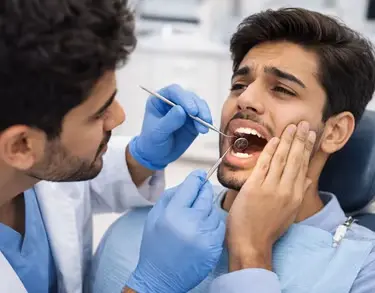
What Causes a Toothache?
Tooth pain usually has an underlying cause that can be identified through a dental examination. The most common causes treated at Care 32 include:
- Tooth decay: A cavity that reaches the sensitive inner layers of the tooth.
- Pulp infection or abscess: Bacteria reach the nerve, potentially causing throbbing pain, swelling or a gum pimple.
- Cracked or fractured tooth: Sharp pain while biting or releasing pressure, sometimes without visible damage.
- Gum disease or gum abscess: Aching, bleeding or swollen gums, and sometimes tooth mobility.
- Worn enamel or an exposed root: Brief sensitivity to hot, cold or sweet foods and drinks.
- Impacted wisdom tooth: Pain at the back of the jaw, swelling or difficulty opening the mouth.
- Lost or broken filling or crown: An exposed or damaged tooth reacts to food, air and temperature.
- Teeth grinding or a high bite: Tooth or jaw discomfort that may be worse in the morning.
- Sinus infection: Aching in several upper back teeth, often with nasal congestion.
What Does Your Type of Tooth Pain Mean?
The way a tooth hurts can offer clues about the cause, but symptoms alone cannot confirm a diagnosis. A dentist needs to examine the tooth and may recommend an X-ray.
Common Pain Patterns
- Brief, sharp twinge: May be caused by early decay, a worn area or a small crack.
- Pain that lingers after hot or cold: May indicate inflammation of the tooth's nerve.
- Throbbing pain that wakes you: Can occur with nerve inflammation or an abscess.
Other Symptoms
- Pain on biting: May be linked to a crack, a high filling or infection around the root.
- Aching with swollen gums: May indicate gum disease or a gum abscess.
- Pain that suddenly stops: Does not always mean the problem has resolved; the tooth still needs checking.
How Is a Toothache Treated at Care 32?
Treatment begins with an examination to understand the source of the pain. Your dentist then explains the findings and discusses suitable treatment options.
Your Symptoms and Medical History
You explain where the pain is, when it started, what makes it worse and which medicines you take.
Dental Examination
The affected tooth, neighbouring teeth, gums and bite are checked. The dentist may test sensitivity and tenderness.
X-ray If Needed
A dental X-ray may help identify decay, infection around the root or other problems that are not visible during examination.
Diagnosis, Options and Costs
The cause, recommended treatment, likely number of visits and estimated cost are explained before treatment begins.
Pain Relief and Treatment
Depending on the cause, treatment may include a filling, root canal treatment, gum care, repair of a crown or adjustment of a high bite.
Aftercare and Follow-up
You receive instructions for home care, advice about medicines when appropriate and a follow-up plan if needed.
Treatments That Help Stop Tooth Pain
The right treatment depends on what is causing the toothache. After examining the tooth, your dentist may recommend one of the following.
Tooth-Saving Treatments
- Tooth-coloured filling: Repairs a cavity or a small chip when the tooth can be restored with a filling.
- Root canal treatment: Removes infected or irreversibly inflamed tissue inside the tooth and may help preserve it. A crown may be recommended afterwards.
- Teeth cleaning and gum treatment: Helps manage pain associated with tartar build-up and gum problems.
- Crown or repair: Restores a damaged tooth or replaces a broken restoration where suitable.
Other Treatment Options
- Sensitivity treatment: Fluoride or bonding may help with suitable cases of exposed roots or worn enamel.
- Bite adjustment or night guard: May help when pain is associated with a high filling or teeth grinding.
- Wisdom tooth treatment: Assessment and possible extraction when an impacted tooth is causing problems.
- Extraction: Considered when a tooth is too damaged to be predictably saved; replacement options can be discussed.
What Can You Do for a Toothache Until You See the Dentist?
A few simple steps may help you stay more comfortable while you arrange dental care. They do not replace an examination or treat the underlying cause.
Ways to Ease Discomfort
- Rinse gently with warm salt water and spit it out.
- Floss carefully around the tooth if food may be trapped.
- Apply a cold pack to the cheek for about 15 minutes at a time, with a break between applications.
- Avoid very hot, cold, sweet or hard foods on the affected side.
- Keep your head slightly elevated when resting if this helps reduce throbbing.
What to Avoid
- If you use an over-the-counter painkiller, follow the pack directions and check with a pharmacist or clinician if you have health conditions or take other medicines.
- Never place an aspirin or painkiller tablet directly against the tooth or gum; it can injure the tissue.
- Do not use leftover antibiotics or take antibiotics without a clinician's advice.
- Do not rely on clove oil or home remedies to cure decay or infection.
How to Prevent the Next Toothache
Daily oral care and timely dental visits can help reduce the risk of cavities, gum problems and avoidable dental pain.
Daily Habits
- Brush twice a day with fluoride toothpaste.
- Clean between your teeth daily with floss or another suitable interdental cleaner.
- Limit sugary snacks and drinks between meals.
- Avoid biting ice or using your teeth to open packets.
Regular Dental Care
- Have regular check-ups based on your dentist's advice.
- Get a cracked tooth or lost filling checked before it becomes more painful.
- Consider a night guard if your dentist identifies teeth grinding.
- Ask about professional cleaning if plaque or tartar builds up.
What Does Toothache Treatment in Punawale Cost?
The consultation fee at Care 32 Dental Clinic is ₹200. The cost of treatment depends on the cause of the pain and the procedure required. A filling, root canal treatment, gum procedure and crown each have different costs.
An X-ray or crown may be charged separately where needed. After the examination, the dentist explains the recommended treatment, estimated costs and likely number of visits before you decide how to proceed.
Why Choose Care 32 for Toothache Treatment?
- Examination to identify the source of pain before recommending treatment
- A tooth-saving approach where a filling or root canal can reasonably preserve the tooth
- Open seven days a week, with evening hours until 9 PM
- Walk-ins may be accommodated when a slot is available
- Estimated costs explained before treatment begins
- Convenient Jambe Road location in Kate Wasti, Punawale, near Ravet, Tathawade and Kiwale
Frequently Asked Questions About Toothache Treatment in Punawale
Can I get same-day toothache treatment at Care 32?
Same-day care may be possible depending on appointment availability and the cause of your pain. Call +91 73507 05106 to check the earliest available slot. Some problems can be treated at the first visit, while severe infections may require a staged treatment plan.
My toothache went away on its own. Do I still need to see a dentist?
Yes. Pain stopping does not always mean the problem has resolved. The nerve may have become damaged or died, while infection can remain. A dental examination helps identify whether treatment is still needed.
Will I need a root canal for my toothache?
Not always. Root canal treatment may be needed when the nerve is infected or irreversibly inflamed. Other toothaches may be treated with a filling, cleaning, sensitivity treatment or bite adjustment. Examination and any necessary X-rays help determine the right option.
Should I take antibiotics for a toothache?
Do not take antibiotics without advice from a qualified clinician. Antibiotics do not repair decay or treat the source of most toothaches on their own. They may be indicated in certain infections, but definitive dental treatment is often still required.
Is a toothache an emergency?
Arrange prompt dental care for significant or persistent pain. Facial swelling with fever, swelling spreading towards the eye or neck, or difficulty breathing or swallowing requires immediate assessment at a hospital emergency department.
Why does my tooth hurt only when I bite?
Pain on biting can be caused by a crack, a high filling or infection around the root. These problems require different treatments, so the tooth should be examined rather than diagnosed from symptoms alone.